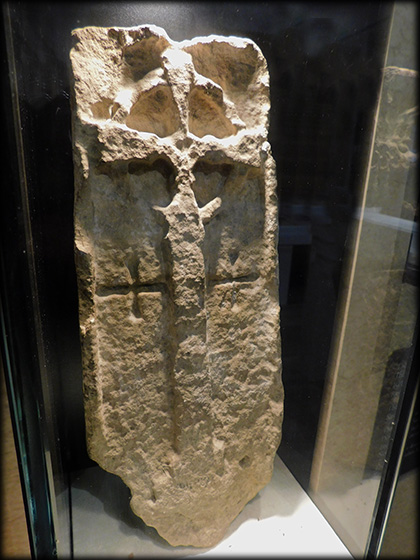
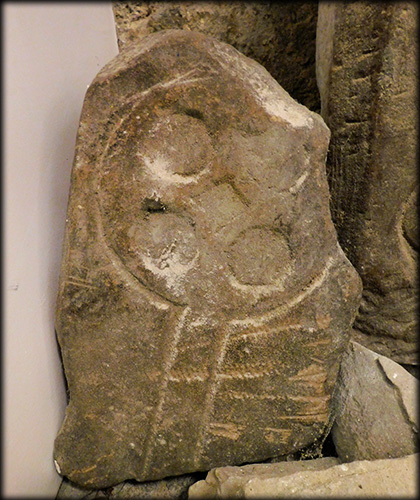
Bangor Early Celtic Monastic, Later Augustinian Abbey According to the Annals of the Four masters St Comgall established a monastery at Bangor (Benchor, Bennchor or Beannchair) in the year 558CE. A manuscript, the Antiphonary of Bangor, is believed to have been written here during the 7th century. It is presently housed in Milan. The monastery was burned in 606CE and again in 755CE, before being raided by Norsemen in 822 and 824 CE. The early monastery fell into decline in the tenth century, before being revived under St Malachy in the 12th century. The earliest surviving stone monuments from this early period are the possible 10th/12th century sundial, now standing in the gardens of Bangor Castle, the possible 11th/12th century cross shaft built into a wall at the private Chapel in Clanboye. A possible decorative altar stone, pictured below left, maybe also be from the end of this first period.
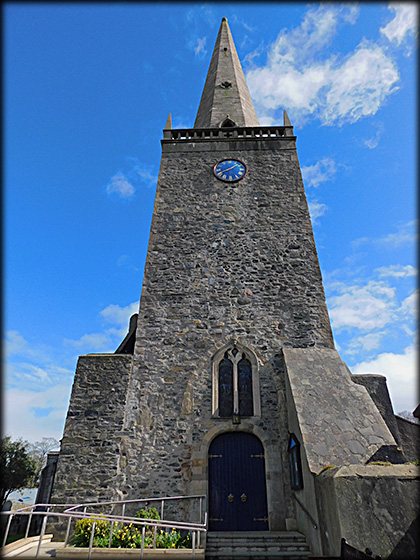
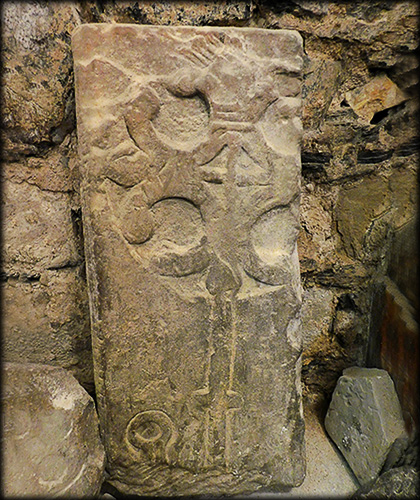
Malachy first became abbot in c.1123CE before spending several years in Europe. When he returned to Bangor in c.1140CE he built a stone church. Two cross slabs may have survived from Malachys period and also the stone wall, known as Malachy's Wall, on the north side of the old monastery. The abbey prospered for a short period under Malachy, but again fell it into decline by 1469 before being dissolved in 1539CE. The present church was built in C.1830 but the tower dates to the 15th century. The church was restored in 1960 and lost some more of its historic fabric. |
|
|---|---|
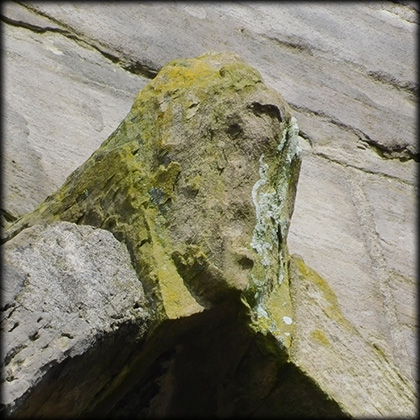 |
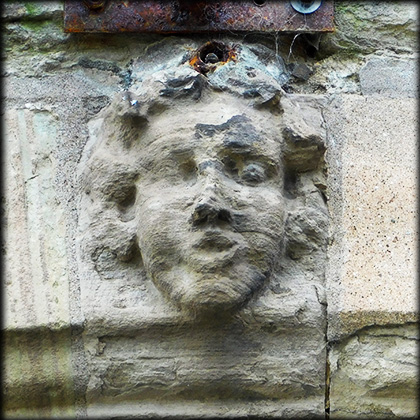 |
Possible altar stone |
Tower |
One of the two Norman cross slabs |
Possibly 11th/12th Century Cross slab |
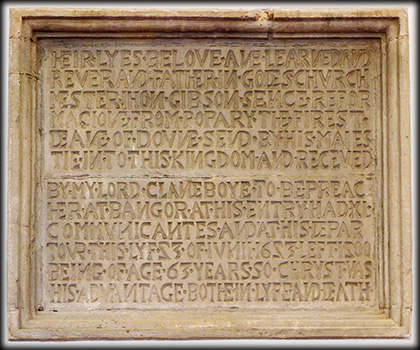
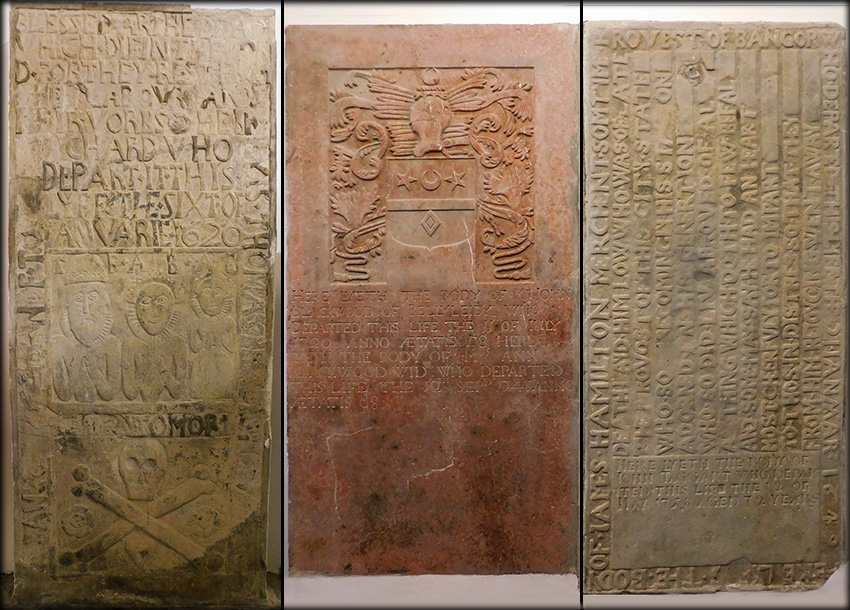
17th/18th Century Tombstones and Armorial Stones Inside the church is an amazing collection of 17th century tombstones. The oldest of them is that of Thomas Bradeshaw (Bradshaw). This beautifully carved tombstone, pictured below left, is situated in the tower. The centre panel bears three figures, they represent, Thomas, his wife and their daughter. You can clearly see their initials carved on each side of the figures head. A momento mori panel, bearing the most common motif, a skull and crossbones, is carved underneath the figures. This is a reminder of the inevitability of death. The two roses and a heart carved on this panel maybe heraldic symbols. The three lines of text above the figures read, DEPART IT THIS LYFE THE SIXT OF IANVARIE 1620. The stone, below centre, is one of two Blackwood armorial stones that lay in the floor of the chancel. Under the Blackwood Crest-Coat of Arms, the following is letters are inscribed: HERE LYETH THE BODY OF MR IOHN BLACKWOOD OF BALLYLEIDY WHO DEPARTED THIS LIFE ON THE 11TH OF IULY 1720 ANNO AETATIS 58 HERE LYETH THE BODY OF MRS ANN BLACKWOOD WIDW WHO DEPARTED THIS LIFE THE 12TH SEPD 1741 ANNO AETATIS 68.
The tombstone below left, is that of James Hamilton a former Provost of Bangor who died in 1649. For an unknown reason the death of a John Taggart, who died in 1758 has also been recorded on the stone. The stone, pictured below left, records the death, in 1629, of William Stevnstone and his wife, it bear the coat of arms of both families, Stevenstone and possibly Edmunstone. A far more interesting monument is the stone pictured below right. It records the death of William Stennors and his wife. He was a member of a masonic guild and was brought to Ireland by Lord Clandeboye to build the church. The shield in the centre bears three masonry symbols, a Compass a Mallet and a Square. Stennors died in1626. There are a large number of tombstones lying against the exterior walls of the church, the most prominent names being Hamilton and Blackwood. |
|
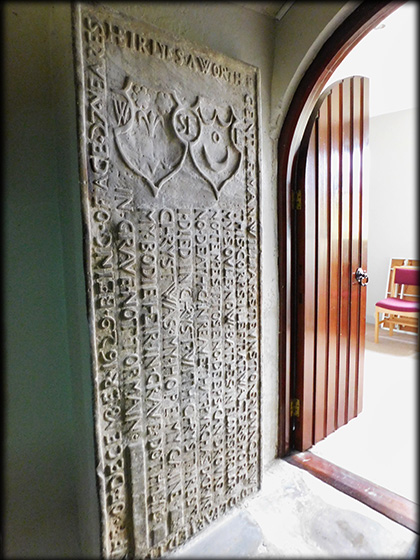 |
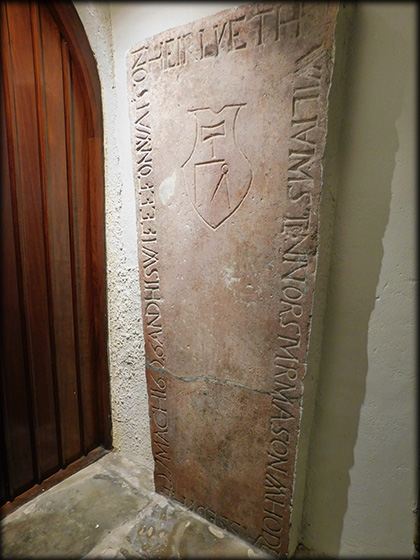 |
Situated: On Newtownards Rd, in the centre of Bangor BT20 4JF. To the south of St Malachy's Wall Discoverer Map 15: J 5007 8108. Last visit Apr 2022. Longitude: 5° 40' 30.0" W Latitude: 54° 39' 20.5" N Photos: José Gutiérrez. |
 |
Ref: Bigger, Francis Joseph, and Herbert Hughes. “Some Notes on the Architectural and Monumental Remains of the Old Abbey Church of Bangor, in the County of Down.” Ulster Journal of Archaeology, vol. 6, no. 4, 1900, pp. 191–209. JSTOR, http://www.jstor.org/stable/20565972. McHugh, Ronan. “Excavations at Malachy’s Wall, Bangor Abbey, County Down.” Ulster Journal of Archaeology, vol. 63, 2004, pp. 65–75. JSTOR, http://www.jstor.org/stable/20568338. |
|

Previous-----Home-----Next Page